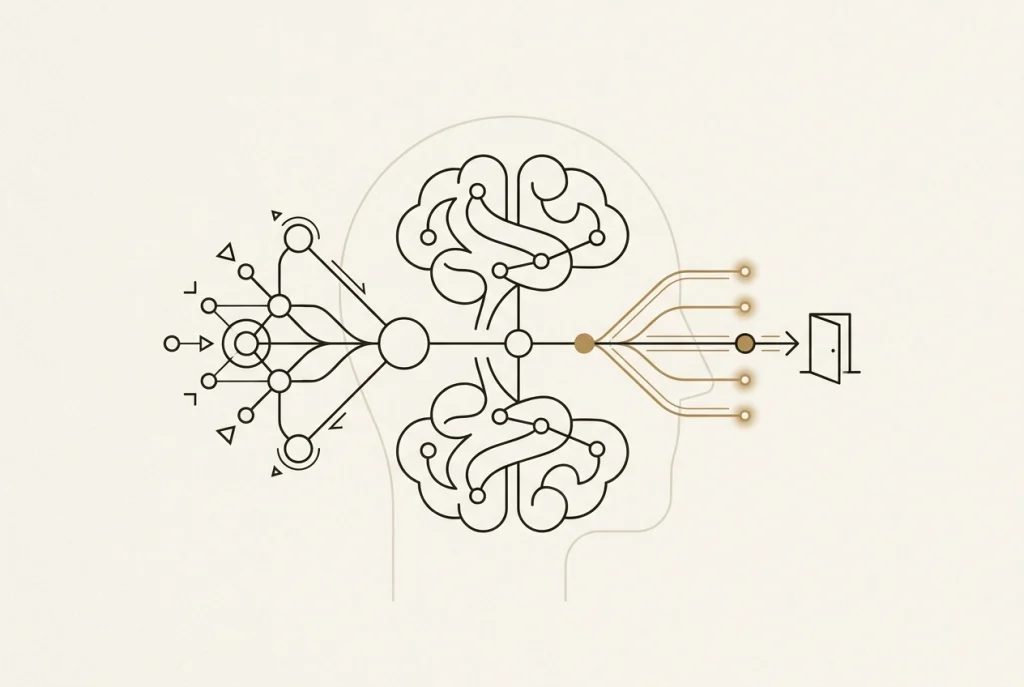

Let’s be honest: most salespeople think they’re consultative sellers, but very few actually are. There’s a big difference between asking a couple of discovery questions before pitching your product and genuinely repositioning yourself as a trusted advisor who helps buyers solve real problems.
Consultative selling is one of those terms that gets thrown around constantly in sales circles, yet it’s frequently misunderstood, poorly executed, or reduced to a superficial checklist. If you’ve been in sales for a while, you’ve probably seen it watered down into something that looks consultative on the surface but still reeks of the same old push tactics underneath.
This tutorial is going to cut through the noise. We’ll break down what consultative selling actually means at its core, why it consistently outperforms transactional approaches, and how to apply its principles in a way that feels natural rather than scripted. Whether you’re looking to sharpen your existing approach or completely rethink how you engage with prospects, you’ll walk away with a clear, practical understanding of what separates truly consultative sellers from everyone else.
The Buyer Who Already Knows Everything
By the time a prospect books a call with you, they have almost certainly already Googled your category, watched a few YouTube breakdowns, run a ChatGPT comparison of their options, and formed a rough shortlist. Research consistently puts pre-contact buyer education somewhere between 70 and 90 percent complete before a salesperson enters the picture. What’s changed in the B2B buyer journey in 2026 frames it plainly: buyers aren’t exploring options when they talk to you. They’re validating a decision they’ve largely already made.
That reframes the entire sales conversation. If your opening move is a feature walkthrough or a benefits overview, you’re not educating anyone. You’re treating a researched, considered buyer like they just stumbled across your category for the first time. That doesn’t build trust. It creates friction, and sometimes quietly signals to the prospect that this conversation won’t give them anything they haven’t already found on their own.
Here’s what the data doesn’t tell you, but experience does: buyers aren’t struggling with a lack of information. They’re struggling with interpretation. They know what the options are. What they don’t know is which option makes sense for their specific situation, what it’s actually costing them to stay where they are, and whether they can trust their own judgement enough to commit. More information doesn’t solve that. A good conversation does.
That’s the gap where consultative selling lives. Not as a personality style or a softer way to pitch, but as the only approach that gives a salesperson a genuinely useful role once the buyer already knows the basics. B2B buying behaviour research reinforces this: 77 percent of buyers describe their last purchase as complex or difficult, despite completing most of the research themselves. Information abundance and decision confidence are not the same thing.
The founder or salesperson who shows up to pitch a pre-researched buyer isn’t just wasting time. They’re starting behind, in a role the buyer didn’t ask them to play.
What Consultative Selling Actually Is
Consultative selling is not a style. It is not a personality type or a softer tone of voice. It is a fundamentally different role for the salesperson to play in the conversation.
In traditional selling, the salesperson’s job is to present a solution and then overcome whatever resistance shows up. The buyer is essentially an obstacle between the pitch and the close. Consultative selling flips that entirely. Your job is to help the buyer understand their own situation more clearly, so they can reach their own conclusion about whether to act, and why.
That shift sounds subtle. It is not.
A buyer who convinces themselves is a completely different buyer. They do not ghost you three days after the call. They do not come back with “I need to think about it” and never respond again. They do not reverse the decision a week later because the conviction was borrowed rather than built. When someone arrives at a conclusion through their own reasoning, that conclusion sticks. This is not a soft insight; it connects directly to what behavioural psychology tells us about commitment and cognitive dissonance. People defend the decisions they feel they made freely. They distance themselves from decisions that feel like they were made for them.
Now, here is where most salespeople misread the method.
Asking lots of questions does not make you a consultative seller. Discovery questions exist in almost every sales process, including deeply manipulative ones. What makes selling consultative is not the presence of questions; it is their intent and effect. Are your questions helping the buyer see their own situation more clearly? Or are they just gathering ammunition for your pitch? One creates clarity for the buyer. The other creates data for you. They feel completely different on the receiving end.
It is also worth clearing up the misconception that consultative selling is slower or “softer” than traditional selling. Done well, it produces faster decisions with fewer objections, because it removes the internal resistance that pitching creates. When you pitch at someone, they naturally push back. When you help someone think through a problem until they feel genuinely understood, resistance dissolves. There is nothing left to argue against.
The structural difference is worth naming clearly. Traditional selling moves from presentation to persuasion. Consultative selling moves from diagnosis to decision, with the buyer doing most of the convincing. As Salesforce frames it, the consultative seller’s question is not “how do I resolve this with my product?” but “how do I help this person achieve their goals?” That reorientation changes everything about how a conversation flows.
Richardson’s definition is worth keeping close: consultative selling sits within a performance discipline, not just a rapport-building exercise. It is a commercial approach that improves win rates and pipeline quality because it produces better-qualified decisions, not just warmer feelings. The buyer leaves clear. And clear buyers close.
The Fake-Curiosity Trap Most Salespeople Fall Into
Here is something worth sitting with: most salespeople genuinely believe they are already asking good discovery questions. They have been trained to build rapport, ask open-ended questions, and listen before pitching. The problem is that the questions themselves are a setup. They are designed to extract specific information that leads the conversation toward a predetermined destination. And experienced buyers can feel that from the first exchange.
This is the fake-curiosity trap. It looks consultative on the surface. It has all the right structural elements: open-ended questions, pauses, the occasional nod. But underneath, the intent is extractive. The salesperson is not genuinely curious about what the prospect thinks. They are mining for the answers that will justify the next step in their pitch sequence.
Salesforce research puts a number on the gap: 86% of buyers say they are more likely to purchase from sellers who understand their goals, yet 59% say most reps do not take the time to actually do this. Salespeople are asking questions. Buyers just do not feel understood. That is not a listening problem. It is an intent problem.
The pattern buyers now recognise goes something like this: a few warm-up questions, some needs-analysis questions, a smooth segue, then the pitch. Buyers in 2026 have been through that sequence enough times to see it coming from the first question. The moment they recognise it, they shift from engaged participant to polite responder. They start giving you the answers they think you want, not the honest version of what is actually going on for them. The conversation continues, but the real decision-making has already disengaged.
Scripted discovery frameworks produce this outcome reliably because they were never designed to understand the buyer. They were designed to qualify the buyer. There is a meaningful difference. Qualification serves the seller’s pipeline. Understanding serves the prospect’s clarity. When a prospect answers a structured sequence of questions but walks away feeling like they just completed a form rather than had a conversation, that framework has failed.
Permission-led questioning works differently. Instead of asking questions that funnel the prospect toward your solution, you frame questions in a way that invites them to explore their own thinking. You are not guiding them toward an answer; you are creating the space for them to surface one.
This is what Neuro-Linguistic Questions (NLQ) are built to do. Rather than extracting information from a prospect, NLQ creates the conditions for the prospect to surface their own priorities, concerns, and genuine reasons to move. The questions are designed to produce insight for the buyer, not ammunition for the seller. When that shift happens, you stop getting rehearsed answers and start hearing what is actually true for the person across from you.
The diagnostic test is straightforward: when you ask a question in a sales conversation, are you genuinely curious about what the answer will be, or do you already know where you want the conversation to go next? If it is the latter, the question is a technique disguised as curiosity. And buyers, especially experienced ones, will feel that difference even if they cannot name it.
The Psychology Behind Why It Works
There is a reason consultative selling works that goes deeper than technique. It is not just a nicer way to have a conversation. The psychology underneath it is surprisingly specific, and once you understand it, a lot of what happens in failed sales calls starts to make complete sense.
Self-Generated Information Hits Differently
Cognitive scientists refer to something called the generation effect. When a person produces information themselves, rather than receiving it passively, they encode it more deeply and feel more ownership over it. In a sales context, this means the moment a buyer articulates their own problem in their own words, they feel the weight of it in a way they simply cannot when you describe it to them. You can frame a problem perfectly, with empathy and precision, and it will still not land the same way as a prospect saying it out loud themselves. This is not a technique. It is how cognition actually works.
This is why good questions do more work than good pitches. The question creates the conditions. The buyer does the rest.
The Role of Cognitive Dissonance
When a prospect acknowledges a gap between where they are and where they want to be, they experience real internal tension. Psychologists call this cognitive dissonance. The two competing cognitions, “I want this outcome” and “I am not currently on track for it,” create discomfort that motivates action. That tension already exists inside most buyers before they speak to you. Your job is to help them surface it clearly, not manufacture it artificially. The selling psychology behind consultative sales confirms that this psychological underpinning is central to why the methodology produces different results, not just different conversations.
Trying to manufacture urgency from the outside is what creates resistance. Helping someone see their own situation clearly is what creates movement.
Certainty, Not Persuasion, Closes Deals
Buyer certainty is the actual prerequisite for a close. Not enthusiasm, not rapport, not a well-delivered pitch. The felt sense that a decision is right, arrived at through the buyer’s own reasoning, is what allows someone to say yes and mean it. A pitch cannot produce certainty. It can produce interest, curiosity, even excitement, but those are not the same thing. Consultative selling research from Simon-Kucher frames this as becoming a trusted advisor focused on long-lasting relationships, because certainty requires trust as its foundation.
When certainty is present, closing is not an event. It is a natural conclusion.
Objections Are Diagnostic Data
Most experienced sellers have been taught to handle objections. Price objections get countered with value. Timing objections get neutralised with urgency. The “I need to think about it” objection gets a follow-up sequence. The problem is that this entire framework treats symptoms rather than causes. Price, timing and “let me think” are almost never the real issue. They are what comes out when a buyer has not yet reached internal certainty. Addressing them directly, at the surface level, rarely resolves anything because you are answering a question the buyer was not actually asking.
Consultative selling addresses the root. When the buyer’s own reasoning has led them to a clear conclusion about their situation and what it costs to leave it unresolved, the traditional objections lose most of their power before they even appear.
Emotional Intelligence as a Closing Competency
The ability to read what a buyer is actually experiencing in a conversation, and to respond to that honestly rather than following a script, is what separates consistent closers from inconsistent ones in 2026. This is not a soft skill add-on. It is a core competency. Simon-Kucher’s 2026 analysis explicitly lists transparency, authenticity and the ability to read stakeholder priorities alongside analytical skills as primary consultative competencies.
Emotional intelligence in selling means noticing when a buyer goes quiet and choosing to ask rather than push. It means recognising hesitation as incomplete reasoning rather than as a no. It means staying present enough in the conversation to respond to what is actually happening rather than what your script told you to expect. The sellers who do this consistently do not close by persuading people. They close by helping people think clearly enough to make a genuine decision.
How Consultative Selling Looks in a Real Conversation
The anatomy of a consultative sales conversation is not complicated. But it does require discipline, because almost every instinct a founder or salesperson has will pull them in the wrong direction.
There are five movements in a well-run consultative conversation: establish intent, diagnose, reflect back, present, and invite a decision. Most people get two or three of them roughly right and rush the others. The result is a conversation that feels okay but produces an “I need to think about it” at the end.
Set the frame before you say anything else
The first thing you do on a consultative call is tell the buyer exactly what you are doing and why. Not a canned opener. A genuine statement of intent: what the conversation is for, what you plan to cover, and what a useful outcome looks like for both of you.
This sounds simple. It changes everything. When a buyer does not know where a conversation is going, they go into self-protection mode. They answer questions guardedly, they withhold real concerns, and they start looking for an exit. When you frame the call honestly at the start, the adversarial dynamic dissolves. You are no longer a salesperson trying to corner them. You are two people figuring out whether something makes sense together.
Diagnose properly before you say a word about your solution
Gong’s analysis of thousands of B2B conversations found that top-performing reps speak only 43% of the time. Buyers do the talking for the other 57%. Reps who dominate the conversation, speaking more than 65% of the time, see measurable drops in win rates. That data is a proxy for one thing: diagnosis is where the real work happens.
The most expensive mistake in a sales conversation is moving to solution too fast. Founders are especially prone to this because they are close to what they have built and they genuinely want to help. But a buyer who does not feel fully understood will not trust your recommendation, even if it is the right one. Trust is built in the diagnostic phase, not the presentation.
This is also where Neuro-Linguistic Questions earn their keep. The goal is not to gather information so you can pitch more accurately. The goal is to ask questions that help the buyer understand their own situation more clearly than they did before you started.
Reflection is not paraphrasing
Here is a distinction worth making carefully. When most salespeople are told to “reflect back” what a buyer said, they paraphrase for rapport. “So it sounds like you’re struggling with lead quality, is that right?” That is not reflection. That is a summary.
Real reflection surfaces the implications of what the buyer said. It sounds more like: “If that has been going on for 18 months, what has that actually cost you in terms of time your team has not been able to spend on higher-value work?” You are not restating their problem. You are helping them see the weight of it. Buyers regularly articulate urgency in that moment that they had not yet put into words before you asked.
The close is not a technique
When you run a conversation this way, the close does not feel like a close. The buyer has talked through their situation, felt genuinely understood, had the implications reflected back clearly, and heard a recommendation built entirely from what they told you mattered. Asking for a decision at that point feels logical. It is the natural next step rather than a pressure move.
The CONSULT Method gives founders and sales teams a consistent structure to run this kind of conversation without turning every call into a rigid script. Structure and spontaneity are not opposites. A clear framework actually gives you more room to be present in the conversation because you are not trying to remember what comes next.
If you want to see how the CONSULT Method maps to a real call, the NLQ Playbook walks through the full framework in detail.
Why Founders Specifically Get Stuck Here
Most founders are genuinely good at selling. Not because they have formal training, but because they know their product inside and out and they actually care what happens to the buyer after the call ends. That combination, deep knowledge plus authentic investment in the outcome, is exactly what consultative selling requires. The problem is that it lives entirely in their gut, and you cannot delegate a gut feeling.
There is no document that captures why a founder asks a particular question at a particular moment. No playbook explains why they slow down when a prospect mentions a specific frustration, or how they instinctively know when to push and when to back off. It all runs on pattern recognition built over years of being close to the product and the customer. That is valuable. It is also completely invisible to anyone you hire.
So when a founder tries to scale their sales function, the incoming hire faces two realistic paths. They either happen to share enough of the founder’s personality and instincts to pull off a similar style (which is genuinely rare, and mostly luck), or they default to what is actually teachable, which is usually a structured pitch deck and a list of features. The consultative conversation gets replaced by a product walkthrough, and close rates quietly drop. Founder-led sales bottlenecks follow a predictable structural pattern at scale: the process degrades precisely when the founder steps back.
What follows from that is the ceiling problem. When deals get complex, high-value, or involve multiple stakeholders, everyone in the business knows who needs to handle it. The founder. The inboxes, the referrals, the re-engagement requests all route back to one person. The team is not incompetent; they just have never been given a framework that works at that level. Revenue growth stalls not because the market dried up, but because one person can only run so many sales conversations in a week.
As Skylar Lewis puts it plainly, the founder who refuses to delegate eventually becomes the bottleneck of their own growth. What gets you to the first million in revenue is not the same thing that gets you to ten million. At the early stage, the founder being the engine is appropriate. At some point, that same behaviour becomes the constraint.
Repeatable, simpler sales processes were flagged as a critical organisational priority heading into 2026 precisely because this bottleneck is widespread across scaling businesses. The instinct is often to hire more salespeople, but more people running an undocumented process just produces more inconsistency at greater cost.
The actual solution is process design, which sounds less exciting than it is. LinkedIn research on consultative selling going non-negotiable in 2026 points to the same conclusion: the teams that win are not the ones with the loudest reps, they are the ones with the clearest frameworks for having genuinely diagnostic conversations at scale.
The goal of systematising a consultative approach is not to make every call sound the same. It is to extract the principles underneath what the founder does naturally, the question sequencing, the problem-first framing, the listening discipline, and put them into a structure the team can actually learn, practise and improve over time. That is not a script. It is a way of thinking about the conversation that anyone with the right disposition can develop.
The real transition here is not a sales transition. It is a leadership one. Moving from being the best salesperson in the business to being the person who builds a business where consultative selling is just how things are done, on every call, with every rep, regardless of whether you are in the room.
Why Consultative Selling Reduces Objections and Ghosting
Most objections are not about your offer. They are about certainty. When a buyer says “I need to think about it” or “the price is a bit steep,” they are not telling you the deal is dead. They are telling you the conversation did not yet produce enough clarity for them to move forward. That is a diagnosis problem, not a closing problem.
The certainty gap almost always opens in the same place: the moment a salesperson rushes from discovery into prescription. The buyer has barely finished describing their situation and suddenly there is a solution being presented, a price being floated, a next step being proposed. The buyer has not yet connected their own problem to your offer in their own mind. You have done it for them. And because they did not reach that conclusion themselves, it does not feel solid. So they stall.
Ghosting works the same way, but with an extra layer of social dynamics. Most buyers are not going to tell you on the call that they are confused, unconvinced, or uncertain. That would feel awkward. So they say something polite, “sounds interesting, let me have a think,” and then they quietly disappear. The ghosting did not happen after the call. It was decided during it, the moment they realised they could not surface their real hesitation without it becoming confrontational. A consultative approach creates enough psychological safety that the hesitation comes out during the conversation, where you can actually do something with it.
Here is the mechanic that makes consultative selling structurally different: when a buyer has articulated their own problem, named their own priorities, and stated their own reasons to act, the objections they might otherwise raise have already been addressed. Not by you. By them. The Art of Certainty framework captures this well: confident decisions come from the buyer’s own clarity, not from the salesperson’s persuasion. You cannot talk someone into certainty. You can only create the conditions for them to find it themselves.
The common stalls, “I need to think about it,” “I need to check with my partner,” “the investment is a lot,” are not objections in the traditional sense. They are requests for more certainty that was not produced earlier in the conversation. A consultative sales approach addresses buyer needs before a decision is invited, which is exactly why these phrases surface less often when the conversation is structured properly.
Sales teams that shift to a consultative model tend to see fewer late-stage stalls, not because their reps are better at handling objections, but because the objections were never necessary. The buyer already had what they needed to decide. That is a fundamentally different outcome from training your team to respond faster when someone says no.
Closing More While Sounding Like Yourself
Here is something a lot of experienced salespeople will recognise but rarely say out loud: the reason they resist sales frameworks is not laziness or arrogance. It is because the last time they tried to adopt one, they sounded like a different person. Buyers noticed. The conversation felt stiff. They abandoned the framework halfway through the call and went back to winging it.
That resistance is legitimate. It is not a training problem. It is an identity problem, and almost no mainstream consultative selling content addresses it directly.
Most of what gets written about consultative selling describes what to do: ask open-ended questions, listen actively, diagnose before you prescribe. The process steps are well-documented. What is missing is any guidance on how to do those things in a way that actually sounds like you, whether you are naturally direct, warm, blunt, casual or somewhere in between.
This matters because buyers in 2026 are not looking for a polished consultant. They have already done their research before the call. They are not there for a product walkthrough. What they are looking for is someone who is genuinely engaged with their specific situation, someone who asks sharp questions and actually listens to the answers. Research consistently shows that 84% of buyers are concerned about pushy sales tactics, and that top-performing reps speak only around 43% of the time. That talk ratio is not a target to hit by timing yourself. It is a symptom of internalized curiosity. When you are genuinely interested in what a buyer is dealing with, you naturally ask more and talk less.
This is the distinction the NLQ Playbook is built around. It is not a script. It is a set of question structures that create real engagement, and they are designed to be adapted to fit the way you naturally speak. The structure is transferable. Your voice is not replaced by it.
The result of internalising a consultative approach is not that you sound like a consultant. It is that you sound like yourself, asking better questions. That is what actually closes deals.
Where AI Fits In and Where It Doesn’t
Let’s be clear about something before we talk about AI in sales: the question was never “will AI replace salespeople?” The real question is “which parts of selling can AI do better than humans, and which parts can’t it touch?” In 2026, we have enough data to answer that properly.
According to Salesforce’s State of Sales report, 94% of sales leaders who have deployed AI agents now consider them essential for meeting business demands. That is not a future projection. That is current operational reality. And 88% of reps using AI agents say the technology increases their odds of hitting their targets. These numbers are hard to argue with.
But here is the part that matters most for how you build your sales function: the performance gains are concentrated in administrative and operational tasks, not in the conversation itself. Sellers expect AI to cut prospect research time by roughly a third and email drafting by a similar margin. The lift is real, but it lives in the prep work and the follow-up, not in the thirty-minute call where the deal actually moves.
The gap between high performers and everyone else is already widening along this exact line. High performers are 1.7 times more likely than underperformers to use AI-powered prospecting tools. The difference is not that top performers automate more of the conversation. It is that they use AI to free up capacity so they can be more present and more skilled in the conversations that matter. Underperformers, meanwhile, stay buried in admin and never get the space to actually develop their craft.
The division of labour is becoming operationally clear. AI owns research, scheduling, follow-up sequencing, call transcription, deal risk detection, and lead scoring. Humans own the trust-based, judgment-intensive, real-time advisory dialogue that produces genuine buyer certainty. These are not interchangeable. AI works from historical patterns and structured signals. Consultative selling requires something categorically different: the ability to help a specific buyer, in this conversation, today, surface what they actually care about and why it matters enough to act on.
That is not a task you can automate. It requires listening, reading the room, asking a question that reframes the buyer’s own thinking, and knowing when to stay quiet. No tool does that.
For founders building a sales team, the practical implication is straightforward. The investment case for AI infrastructure and the investment case for consultative capability are not competing priorities. They are sequential. AI clears the administrative drag. Consultative skill determines what your team does with the time AI returns. One without the other is incomplete.
Where to Take This Next
Consultative selling is the baseline now. It is not the differentiator it was five years ago. What separates the best from everyone else in 2026 is how deeply they understand it, how consistently they execute it, and whether it is embedded in a process the whole team can actually use, not just the founder who built it.
The practical starting point is not a methodology overhaul. It is one shift in how you approach your next conversation: commit to understanding the buyer’s situation more completely than you think you need to, and hold off on the solution until the diagnosis genuinely feels complete. That single discipline, applied consistently, changes the texture of every sales conversation you have.
For founders who are the bottleneck in their own sales process, the priority is making the consultative approach explicit enough to teach. That starts with understanding the principles behind what you already do well. Not codifying every word, but extracting the logic so it can be transferred.
The NLQ Playbook is a practical place to start. It is a structured set of question frameworks grounded in applied sales psychology that can be learned, adapted, and installed into a team without producing robotic or scripted calls.
If you want to go deeper, whether refining your own conversations or building a team-wide capability, exploring what it looks like to work directly with Caleb is a low-pressure next step worth taking.